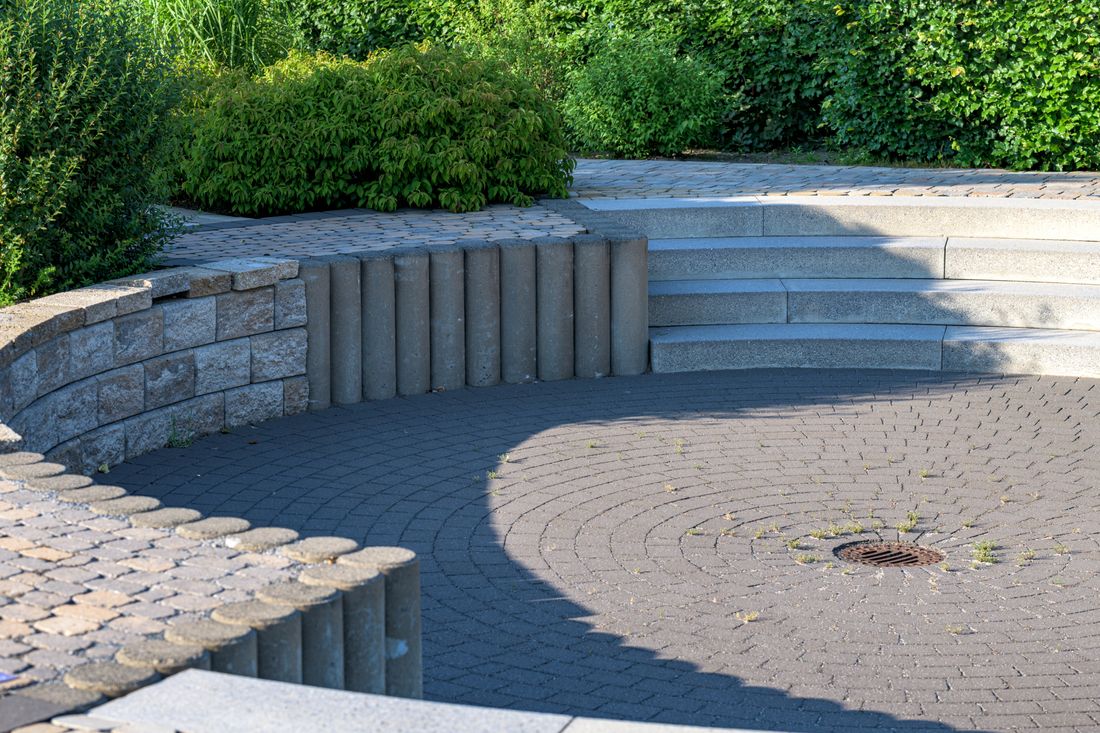
Garden design in Epping and Theydon Bois
Gardens on the forest edge — Green Belt plots, protected trees and the large detached houses of Theydon Bois and Coopersale.
Epping and its neighbouring villages sit on the edge of Epping Forest, where Green Belt meets large detached plots: generous gardens on Theydon Bois and Coopersale lanes, town gardens running up from the High Street, and a treed landscape that makes gardens here greener by default.
That tree cover is also the constraint. Tree preservation orders are common across the district, roots run close to the surface under forest-edge ground, and the design work starts with what must be kept, not what can be removed.
Forest-edge plots and detached lanes
On the bigger plots of Theydon Bois and Coopersale, our schemes lean into the setting: layered planting that connects the garden to the forest beyond, terraces with a cleared canopy view, and structures — pergolas, garden rooms — sited under the arboricultural rules before the design rules.
In Epping itself, town plots ask for more enclosure: privacy from close neighbours, lighting that extends the day, and front gardens designed with the High Street’s period face in mind.
Green Belt, TPOs and forest edge
Building anything near Epping Forest means working with tree protection orders and conservation areas — checks we run at design stage through Epping Forest District Council’s planning service. Gardens in the Green Belt also face stricter rules on structures and outbuildings than town gardens elsewhere.
Under the trees, the ground is root-run and often dry shade — a specific planting environment with a specific palette. We design for the ground you have, not the catalogue.
There is a TPO on a tree in our garden — does that stop the design?
No, it shapes it. Protected trees are designed around: root protection zones, no-dig construction details, and planting that complements the canopy. We deal with the council on any works.
Can we build a garden room in the Green Belt?
Usually yes if it is genuinely incidental to the house and within size limits, but Green Belt rules are stricter than town permissions. We check your address with the district council first.
What plants cope with dry shade under trees?
A generous palette: ferns, epimedium, hellebores, sweet woodruff and a long list of woodland-edge perennials. Dry shade is a planting discipline we design with, not against.
Do you work in Theydon Bois and Coopersale?
Yes — the lanes around both villages are among our regular working areas, alongside Epping itself.
Our plot is large — do you stage projects?
Often. Large plots are commonly built in phases — structure and terraces first, borders and finer planting in following seasons — which spreads cost and lets shelter planting establish.
Start your project
Arrange a design visit and we will walk the garden with you, listen to how you want to live in it, and set out what a design and build would involve.