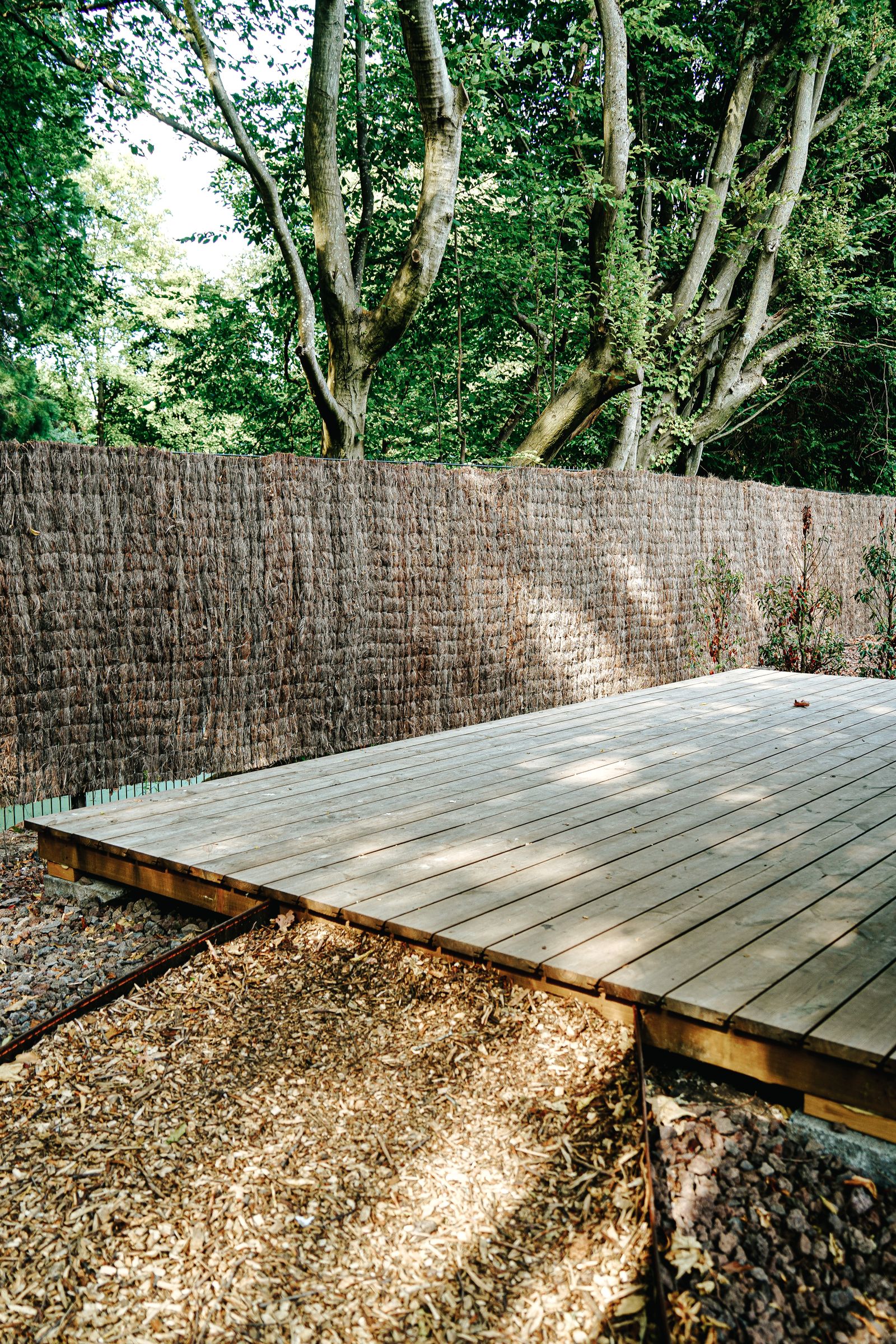
If there is one subject that decides whether a garden in this county thrives or merely survives, it is the ground it is built on. Essex and Hertfordshire clay is the best soil in the region — rich, fertile, water-retentive — and the most punishing, in the same week, to anyone who builds or plants without understanding it.
First, the behaviour. Clay is made of microscopic platelets that swell when wet and shrink when dry. In a wet Hertfordshire winter, a clay garden holds water at the surface and moves under load; in a dry summer — and our summers are getting drier — the same ground cracks, shrinks, and pulls foundations and patios with it. Around Great Dunmow, the Chelmsford clay belt and much of the Harlow and Bishop's Stortford country, this seasonal cycle is the single biggest cause of failed terraces, leaning walls and lawns that turn to mud in February and dust in August.
So we build for it, in this order.
Drainage comes first. A terrace on clay needs falls that move water away, land drains where the ground sits wet, and often a soakaway or a connection to a proper outfall. Water standing on clay in October is not a puddle to be swept; it is a warning. Every Conway build starts below the surface, and on clay this is not optional — it is the difference between a terrace that holds and one that heaves. Our construction approach treats the sub-base as the most important material on site.
Sub-bases follow: excavated to real depth, geotextile membrane where the ground is soft, MOT Type 1 compacted in layers. This is not advanced engineering; it is simply the work that cheap quotes skip and five-year-old patios reveal.
Then the soil. Planting in raw clay fails for the opposite reason people expect — not because clay is poor, but because it is dense: roots cannot breathe and winter water cannot drain. Our preparation is to dig real planting pits and borders, break the structure with grit and organic matter, and, on new-build estates where the 'soil' is compacted subsoil spiked with rubble, to replace it outright. This is the unglamorous half of a planting scheme, and it is why we are a design and build company rather than a plant-and-run one.
Then the planting, chosen for the ground. Clay's generous palette, once drainage is handled: roses, hydrangeas, philadelphus, geraniums, astilbe on the damper side, salvia and nepeta on the drier. Mulch in spring to hold moisture and temper the summer crack. Avoid the acid-lovers and the alpine-thrivers that need sharp drainage; clay is honest about what it will grow. Our planting design starts with a soil test, not a plant list.
Lawns get the same honesty. Clay lawns compact under foot traffic in winter and bake in summer; they want hollow-tine aeration, an autumn topdress of sandy loam, and a mowing height kept a notch higher than the calendar suggests. If a family lawn on clay is the brief, we design the drainage for the winter and the hard-wearing cultivars for the summer — and we will tell you honestly if the shade-and-clay corner is better as a planted bed than as grass.
New-build gardens deserve a special word, because they arrive with compaction built in. Strip the site, stack the topsoil, run diggers over it all — then reinstate a thin smear of the worst of it and turf it. On the estates around Harlow and north Bishop's Stortford we spend the first phase of most projects simply repairing what the housebuilding left: subsoil decompacted, real topsoil imported, drainage installed. Plants cannot fix ground that was never prepared; only ground work fixes ground.
None of this is to warn you off clay — the county's best gardens stand on it. It is to say the order of operations is fixed: drainage, base, soil, then beauty. Do them in that order and clay is an ally. Skip one, and no budget of plants will hide it.
If your garden puddles in winter, cracks in August, or arrived as a new-build rectangle of thin turf, the first visit costs nothing — and starts, as it should, with a spade in the ground.